


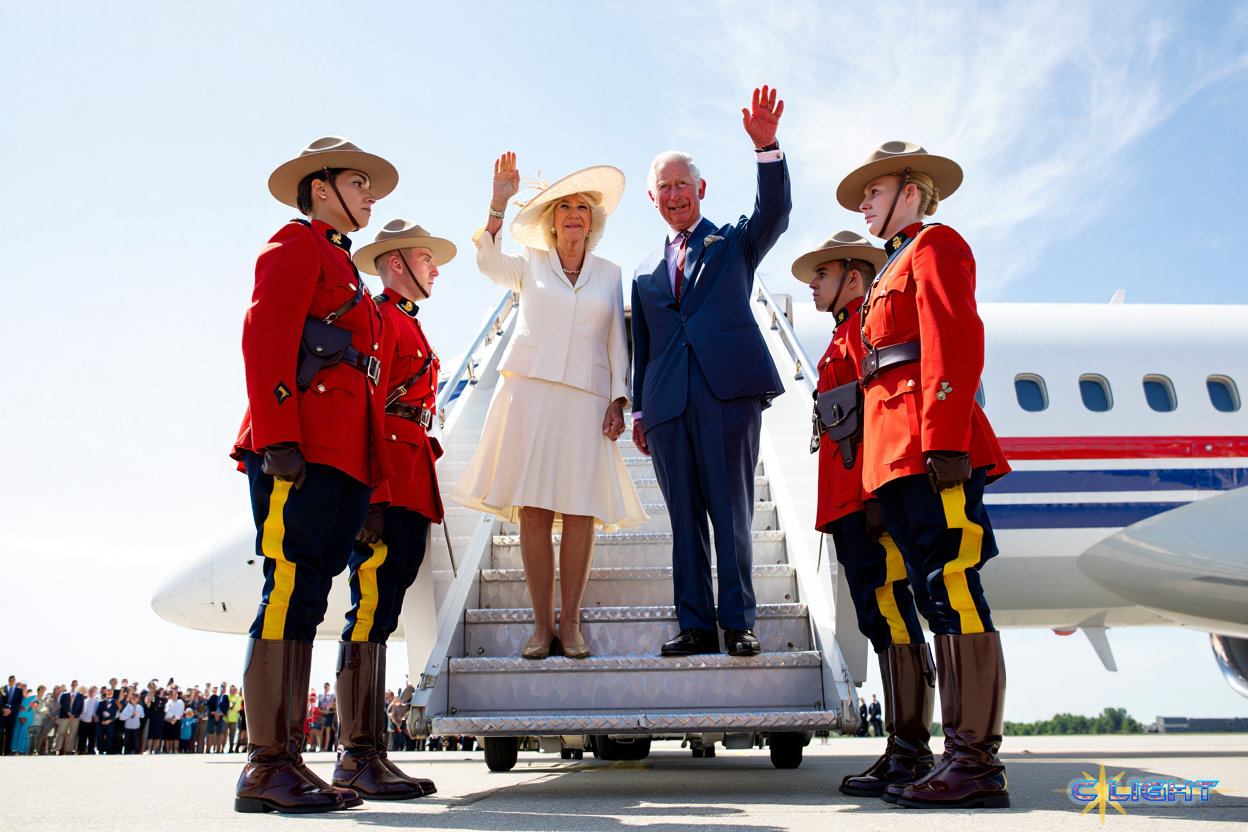
In a display of careful formality and tradition that almost felt like a carefully aimed diplomatic spitball, King Charles III, in his capacity as King of Canada, graced Ottawa this week. His primary mission: to open Canada’s 45th Parliament by delivering the Speech from the Throne. His secondary, arguably more Herculean task: to subtly, ever so gently, remind the boisterous southern neighbour and its current Tweeter-in-Chief, President Felonious Punk, that Canada is, in fact, its own sovereign nation and not, as has been casually suggested from Washington, merely the 51st state-in-waiting. Good luck with that, Your Majesty.
The pageantry was impeccable. The King and Queen Camilla arrived to greetings from Prime Minister Mark Carney, Canada’s first Indigenous Governor General Mary Simon, an honour guard from the Royal Canadian Dragoons (of which Charles is Colonel-in-Chief), and even schoolchildren. Queen Camilla, playing her part in this intricate dance of soft power, donned the historic Queen Mother’s Diamond Maple Leaf Brooch – a sartorial signal flare of Canadian identity. It’s the kind of nuanced messaging that requires a certain level of, shall we say, interpretive sophistication to fully appreciate.
Prime Minister Carney, bless his optimistic heart, framed the visit as Charles acting as a “steadfast defender” of Canadian sovereignty against those pesky “threats” from Washington. The King’s speech itself, meticulously penned by Carney’s office, is set to outline Canada’s agenda, with its very first goal being the negotiation of a new economic and security relationship with the U.S., while also building stronger ties with other “reliable trading partners and allies around the world – including the UK.” Subtle, isn’t it? Almost as if Canada is politely saying, “We have other friends, you know.”

This reliance on “brooch diplomacy” and carefully worded speeches read by a constitutional monarch (who, as royal historian Justin Vovk reminds us, “can only operate inside a box defined by parliament”) is a time-honored tradition. Queen Elizabeth II was a master, once wearing an Obama-gifted brooch to meet Punk, then a Canadian snowflake pin when U.S.-Canada relations were particularly frosty. Charles himself has been doing his bit, sporting Canadian military insignia and dutifully planting maple trees. These are the high arts of monarchical messaging, the royal equivalent of a very polite but firm “please keep off the grass” sign.
The question, of course, is whether anyone in the White House owns a decoder ring for such delicate communiqués. U.S. Ambassador to Canada, Pete Hoekstra, perhaps reflecting a more direct American style, told CBC News that while the U.S. was “thrilled” by the visit, “If there’s a message in there, there’s easier ways to send messages. Just give me a call. [Mark] Carney can call the president at any time.” One can almost hear the collective sigh from Ottawa to Buckingham Palace. Yes, Ambassador, but that rather misses the point of deploying a centuries-old institution to deliver a message of enduring sovereignty, doesn’t it?
Meanwhile, south of the border, the object of all this carefully curated symbolism, President Punk, has in the past mused about simply annexing Canada. One imagines his foreign policy briefings on the matter are less about the nuances of Commonwealth relations and more about assessing potential new golf course locations. Royal historian Carolyn Harris expressed hope that Punk, known for his admiration of royalty, might “notice the visit” and perhaps even perceive how “very different Canada is from the U.S.,” with its distinctive history rooted in Loyalists who, anhem, rather pointedly chose not to be American.
The visit also serves an internal purpose, as Professor Philippe Lagasse of Carleton University noted, to “reassure Canadians about their own country’s bedrock institutions.” This involves navigating Canada’s own complex feelings about the monarchy – a majority reportedly wants it abolished, but the constitutional path to doing so is a near impossibility. It also means engaging deeply with Indigenous leaders, who see the Crown as a treaty partner whose “honour must also always be upheld,” as former National Chief Perry Bellegarde emphasized. This intricate tapestry of history, treaty obligations, and modern Indigenous self-determination is a core part of Canadian sovereignty, likely several layers deeper than the “51st state” soundbites emanating from Washington.
Adding another layer of almost comedic diplomatic friction, Prime Minister Carney recalled Canadian displeasure when UK Prime Minister Keir Starmer invited Punk for a state visit (on behalf of the King, no less) precisely when Punk was at his most vocal about Canadian sovereignty. “They weren’t impressed by that gesture,” Carney drily remarked to Sky News. One imagines a few pointedly chosen, perhaps slightly wilted, maple leaf pins were deployed on that occasion.

So, King Charles III, in his taupe suit and red tie, dutifully dropped a ceremonial puck at a street hockey game, planted another tree, and prepared to deliver a speech written by others, all in the service of sending a message. A message of history, of distinct identity, of unwavering sovereignty. It’s a message delivered with all the dignity and tradition a constitutional monarchy can muster.
The world, and especially Canada, now holds its breath. Will the carefully crafted symbolism penetrate the White House walls? Will the King of Canada’s very presence register as anything more than a quaint photo-op for a President more accustomed to dictating terms than deciphering subtleties? Or will Canada have to resort to spelling it out in giant letters made of poutine on the White House lawn?
One sincerely hopes, for the sake of international relations and frankly, for the King’s travel budget, that this message, however delicately delivered, is received. God save the King – from having to do this all over again next year if the first hint wasn’t taken.
Discover more from Clight Morning Analysis
Subscribe to get the latest posts sent to your email.


