


There are phone calls that change the course of business. And then there are the phone calls that signal the potential surrender of an empire. According to a bombshell report from Bloomberg News, just such a call has been made from Cupertino. Apple Inc., the most powerful, secretive, and obsessively self-reliant company on Earth—a corporation that built its trillion-dollar fortress on the bedrock principle of controlling every aspect of its technology—is in active, high-stakes talks to license the very soul of its next generation of products from its chief rivals. The unthinkable is now on the table: the next version of Siri, the iconic voice of the iPhone, may be powered by technology from OpenAI or Anthropic.
For Apple, this is not a strategic partnership; it is a quiet, humiliating admission of defeat. It is a “monumental reversal,” a white flag raised in the most important technological battle of the 21st century. The move stands in stark contrast to the company’s calm public facade at its recent developer conference, where executives touted minor, “incremental developments.” Behind the scenes, a frantic, private panic is underway. And in the ultimate irony, Wall Street—the great arbiter of corporate strength—responded to the news not with alarm, but with applause, sending Apple’s stock price soaring. Investors saw the move not as a failure, but as a long-overdue act of pragmatism.
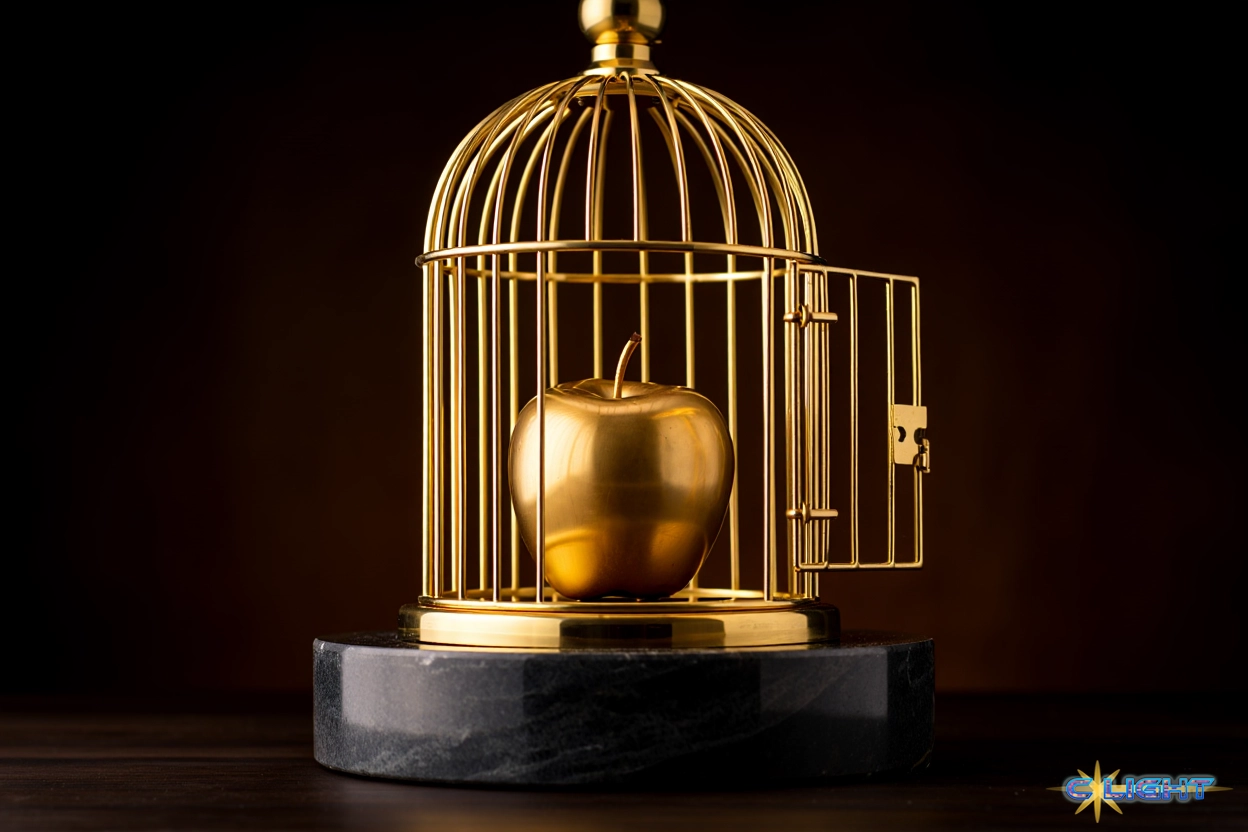
This is the story of Apple’s AI crisis, a drama playing out behind the polished glass of its spaceship campus. It is a tale of internal failure, a brain drain fueled by market mania, and the devastating strategic choice that now confronts the world’s most successful company. This is the story of a king, trapped in a gilded cage of his own making, terrified of becoming a mere courtier in his own castle.

The Palace Intrigue: Anatomy of a Failure
To understand how Apple, a company with seemingly limitless resources, arrived at this moment of crisis, one must look past the press releases and into the hushed corridors of its executive wing. This is a story of a corporate coup, born from a series of cascading failures.
For years, Apple’s AI efforts have been helmed by John Giannandrea, a high-profile hire from Google and a staunch proponent of developing Apple’s core AI technology in-house. But as the generative AI revolution exploded into the public consciousness with the launch of ChatGPT, Apple was conspicuously absent. Its own in-house models were lagging, and the promised AI-powered overhaul of Siri was plagued by delays, now pushed back to 2026 at the earliest.
According to Bloomberg’s reporting, CEO Tim Cook finally “lost confidence.” In a decisive executive shake-up, control of Siri was stripped from Giannandrea and handed to two of Cook’s most trusted lieutenants: Mike Rockwell, the man who launched the Vision Pro headset, and software chief Craig Federighi. Their first move was to initiate a formal internal “bake-off,” a direct competition pitting Apple’s own homegrown AI models against the technology from its rivals. The result was a data-driven humiliation. The executives concluded that Anthropic’s technology was demonstrably superior for Siri’s needs. The path to an outside partnership was no longer a hypothetical; it was a necessity.
The internal fallout has been swift and severe. The decision to look outside has crushed morale within Apple’s own AI teams. These are some of the most sought-after engineers on the planet, and they now feel publicly blamed for the company’s shortcomings. Competitors like Meta are seizing the opportunity, reportedly poaching top talent with staggering, multi-million-dollar compensation packages. Apple’s disciplined, hardware-focused pay structure is simply no match for the lottery-ticket equity being offered in the midst of an AI gold rush. The “walled garden” that once attracted the best and brightest has, for its AI talent, become a prison.
The ultimate proof of this company-wide failure to originate came with the confirmed killing of “Swift Assist,” Apple’s internal project to build an AI coding assistant. In its place, Apple will now integrate third-party tools from OpenAI and Claude directly into its developer software, Xcode. This is not just about fixing Siri’s frustrating inability to understand a simple command. This is a crisis that strikes at the very heart of Apple’s ability to build the future.
The Irrational Market: The World Outside the Walls
Apple’s internal struggles are being massively amplified by an external force it cannot control: a venture capital market that has lost its collective mind. As The Economist has detailed, Silicon Valley is currently in the grip of “vibe valuing,” a new and irrational economic model where hype, charisma, and proximity to the AI revolution have replaced old-fashioned metrics like revenue and profit.
This is a world where Mira Murati, the former CTO of OpenAI, can reportedly raise $2 billion for her new startup at a $10 billion valuation before it has a product, a strategy, or a single dollar of revenue. It’s a world where the AI search engine Perplexity, which burned through $65 million last year on just $34 million in revenue, can command a valuation of nearly $14 billion—more than 400 times its revenue.
This market mania has created a game that Apple is culturally and financially unequipped to play. Tim Cook’s Apple is a machine built on discipline, operational excellence, and, above all, massive profit margins. It cannot and will not compete in a world where companies are valued on vibes and burn through billions of dollars in cash with no clear path to profitability.
In this context, Apple’s decision to consider a multi-billion-dollar annual licensing fee with a company like Anthropic is not just a technological concession; it is a rational, if painful, financial surrender. It is an attempt to buy its way out of a game whose rules are fundamentally anathema to its entire corporate DNA.

The Existential Threat: Originator vs. Enabler
The crisis confronting Apple is not merely financial or technological; it is existential. It strikes at the very core of the company’s identity. As another Economist piece on the consulting industry recently argued, the world is now dividing into two camps: the “originators” of technology and the “enablers.” Originators are the companies that create the deep, foundational tech. Enablers are the middlemen, the consultants like Accenture, who help clients integrate that technology. The devastating conclusion is that in the age of AI, the enablers are facing obsolescence. The power, the value, and the future belong to the originators.
For its entire modern history, Apple has been the world’s ultimate originator. From the custom silicon in the iPhone to the seamless integration of iOS, Apple’s immense success and religious brand loyalty have been built on its fanatical control of the entire technological stack. This is their corporate religion.
The reporting on their AI failures reveals the company’s ultimate nightmare. By considering a partnership with OpenAI or Anthropic, Apple is contemplating a move from its throne as the world’s most powerful originator to the humiliating role of a mere enabler. They would be reduced to being a beautifully designed hardware shell for a competitor’s intelligence. They would be paying a rival billions of dollars for the privilege of putting that competitor’s brain into their products, effectively becoming a high-end, glorified Accenture for the AI age.

The King in the Gilded Cage
This confluence of internal failure and external market mania has left Apple in a state of strategic checkmate. The company is trapped, with both paths forward leading to a kind of defeat.
If they choose Path A and go it alone, clinging to their “originator” identity and relying on their own inferior in-house models, they risk their entire ecosystem—the iPhone, the App Store, the very future of their platform—becoming technologically obsolete. The iPhone would become a beautiful but dumb device in a world of increasingly intelligent agents.
If they choose Path B and partner with an outside firm, they cede the most important technological layer of the next generation of computing to a rival. They surrender the soul of their products, paying billions to a competitor for the privilege of becoming a hardware manufacturer for someone else’s intelligence.
The “walled garden” that once protected Apple, nurtured its growth, and made it the most valuable company on Earth has now become a gilded cage. The company is trapped by its own legendary success, its own disciplined culture, and its own immense pride. It is unable to originate the future and is terrified of the humiliating concessions required to buy into it. The king is still on his throne, but for the first time, the walls are closing in.
Discover more from Clight Morning Analysis
Subscribe to get the latest posts sent to your email.


