


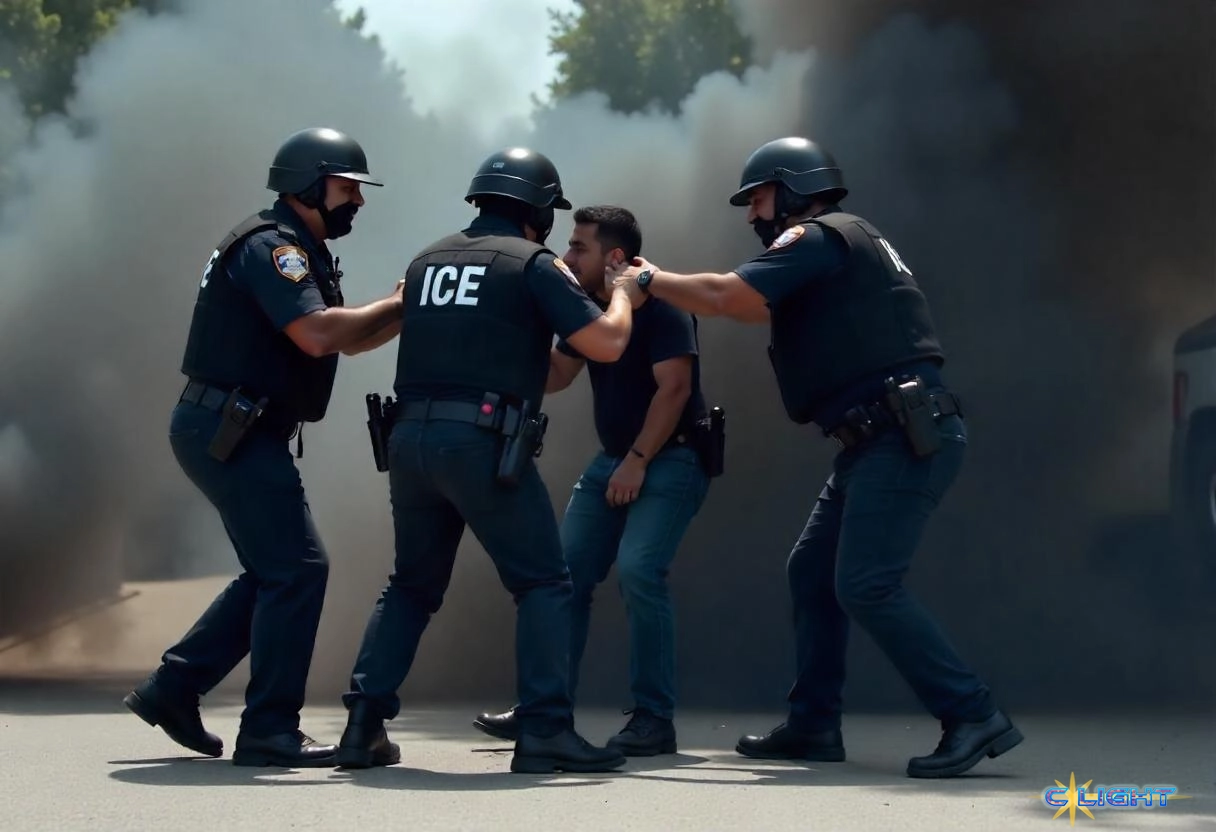
As millions of Americans gather for the long holiday weekend, communities will swell with public gatherings, family reunions, and festive celebrations. Yet, beneath the veneer of normalcy, a pervasive apprehension simmers, particularly within immigrant communities and among those who stand in solidarity with them. The Felonious Punk administration’s intensified push to deport millions of non-citizens has dramatically ramped up U.S. Immigration and Customs Enforcement (ICE) operations, bringing them out of the shadows and, increasingly, into the public square. Videos of masked officers, plainclothes agents, and aggressive tactics—including the smashing of car windows and the handcuffing of parents in front of children—have gone viral, sparking outrage and a torrent of questions.
What, precisely, can you do, or should you refrain from doing, when you witness an ICE arrest unfold? While ICE asserts its operations are “targeted,” professional, and aimed at “those who pose the greatest threat to public safety,” the lived experience of communities, buttressed by legal challenges and expert warnings, paints a far more ambiguous and alarming picture. With large crowds expected, it is imperative for every individual to understand the parameters of lawful engagement and the perils of misinformation.
The Official Narrative vs. The Ground Reality: Decoding ICE’s Powers
From its inception post-9/11, ICE was granted substantial authority over the detention and deportation of non-citizens. The agency’s official stance, as recently articulated on its website, asserts a straightforward mandate: they “do not conduct patrols, raids, or sweeps looking for illegal aliens” but rather “strictly conduct targeted enforcement actions,” focusing on individuals with criminal convictions, pending charges, or those who have re-entered illegally. They contend that accusations of indiscriminate targeting or violations of sensitive locations policy are “misinformation” spread by those with “political agendas.”
Crucially, ICE explicitly states: “ICE does not need a warrant to make an arrest.” This claim rests on Section 287 of the Immigration and Nationality Act, which grants its officers authority to arrest individuals suspected of being in the U.S. illegally without a judicial warrant. They emphasize that no judge can issue a warrant for a civil immigration violation, as this authority is vested solely in supervisory immigration officers. Officers, they claim, operate just like local police in public spaces: if a law is being broken, an arrest can be made. They also caution that obstructing an ICE arrest is a federal crime.
However, the reality on the ground, as documented by multiple journalistic outlets and civil rights organizations, is considerably more complex and fraught.
- Warrantless Arrests in Public: While legally permissible under certain circumstances (if officers have “probable cause” to believe a person is in the U.S. illegally AND is a “flight risk”), the application of this power raises serious concerns. Officers cannot use race or ethnicity as the sole basis for suspicion. Yet, videos often show broad sweeps. Individuals always have the right to remain silent when approached by officers in public, and anything they say can be used against them.
- Private Property Entry: Contrary to popular belief, ICE officers generally cannot enter a private business (beyond publicly accessible areas like a lobby) or a private home without a judicial warrant signed by a judge, or the owner’s explicit consent. While they can employ deceptive tactics, or “ruses,” to gain entry (e.g., pretending to be from another agency), they cannot misrepresent themselves as health or safety officials, nor can they coerce entry through threats or intimidation. The distinction between an administrative ICE warrant (Form I-200 or I-205), which only authorizes an arrest once a person is located, and a judicial warrant, which authorizes entry, is critical and often misunderstood.
- Identification and Masks: ICE claims officers are “professionals who uphold the law” and that they display badges, especially when weapons are visible. Yet, reports of masked officers in plainclothes refusing to give their names are rampant. While no constitutional protection or prohibition on masks exists, this practice inherently generates intimidation and fear, making it difficult for the public to identify agents or later report misconduct.
- “Targeted” vs. Broadened Enforcement: Despite ICE’s claims of focusing on “threats to public safety,” the Felonious Punk administration has aggressively broadened the scope of deportable individuals. Individuals with ongoing asylum claims or temporary protected status—who were not a primary focus in previous administrations—have become targets, sometimes placed in expedited removal proceedings with limited recourse. The sheer volume of arrests, soaring to more than 2,000 a day under Felonious Punk, strains the system and often captures individuals with minor offenses or no criminal record.

The Burden on Local Law Enforcement and Families: An Unintended Crisis
The federal immigration crackdown is creating significant “trouble” beyond the immigrant community itself, ensnaring local law enforcement agencies in a complex legal and ethical quagmire. ICE frequently issues “detainer requests,” asking local jails and prisons to hold individuals suspected of being in the U.S. illegally, often for periods exceeding the typical 48-hour limit. However, these detainer requests are administrative and lack the legal authority of a judicial warrant.
As a result, local jails holding individuals solely on ICE detainers without a judicial warrant are exposing their departments to massive civil liability. Past lawsuits for wrongful detention have cost local governments tens of millions of dollars, with one New York City case costing $92.5 million. As Minnesota Attorney General Keith Ellison has stated, holding someone based solely on an administrative detainer is “essentially holding somebody and locking them up when there’s no legal, lawful authority to do so,” violating Fourth and Sixth Amendment rights.
This has created profound tension. Groups like the National Sheriffs’ Association have voiced concerns, urging clarification from the administration and lobbying Congress for legal solutions. Some local officials, like Iowa Sheriff Dan Marx, who expressed concerns about cooperation violating constitutional protections, have faced severe political backlash and investigations, underscoring the immense pressure on local leaders. Jurisdictions nationwide, including Orleans Parish, Louisiana, and counties in Pennsylvania, are changing their policies to require judicial warrants for ICE detainers to mitigate legal risks, often after costly settlements. This demonstrates a growing recognition among local law enforcement that “doing the right thing for the community” means upholding constitutional due process, even when it puts them at odds with federal directives.
For families, the consequences are immediate and devastating. ICE maintains an online detainee locator, but delays of several days are common due to the sheer volume of arrests. There is no legal requirement for ICE to immediately inform family members of a detention or location, and detainees are often moved quickly to facilities hundreds of miles from home, with costly and limited phone access. While ICE policy requires efforts to ensure U.S. citizen children are considered in deportation proceedings, the reality for parents being handcuffed in front of their young children and then disappearing into the system remains a harrowing constant.

Witnessing an Arrest: What You Need to Know and Do
With large public gatherings expected this holiday weekend, the likelihood of witnessing an ICE encounter increases. Knowing your rights and the rights of those being confronted is paramount.
If you witness an ICE arrest:
- Do NOT physically interfere: This is critical. Physical intervention can lead to your own arrest or serious charges.
- Document, Document, Document: If you are in a public space and it is safe to do so, record the encounter with your phone. This is generally legal and provides invaluable evidence for accountability.
- Observe and Note Details: Pay attention to badge numbers (if visible), vehicle numbers, the agency (ICE, Border Patrol), the number of officers, and the precise time and location. Note any aggressive tactics or apparent violations.
- Ask Questions (if safe and without interfering): You can ask, “Are you ICE?” “Do you have a judicial warrant signed by a judge?” “May I see the warrant?” “What is the warrant for?”
- Understand Warrant Types:
- Judicial Warrant: Signed by a judge, it grants officers permission to enter private property (like a home). Officers cannot force entry without one (absent rare “exigent circumstances”).
- Administrative Warrant (ICE warrant, Form I-200 or I-205): Not signed by a judge. It authorizes an arrest but does not grant permission to enter private property without consent. You do not have to open your door for an administrative warrant.
- Verbally Offer Assistance (without interfering): You can calmly state, “You have the right to remain silent.” “You have the right to speak to a lawyer.” “Do not open your door unless they have a judicial warrant.” “I am recording this.”
- Do NOT Sign Anything: Advise the individual not to sign any documents without first speaking to a lawyer.
- Contact Legal Aid: Immediately contact immigration lawyers or immigrant rights organizations. Many operate emergency hotlines. Provide them with all documented information.
The Felonious Punk administration’s aggressive immigration enforcement, bolstered by increased funding for arrests and detention in the “One Big Beautiful Bill Act,” is creating a pervasive climate of fear and legal uncertainty. This holiday weekend, as communities come together, understanding your rights and being prepared to safely document these encounters is not just about civil liberties; it’s about protecting the fundamental fabric of our society from tactics that sow division and undermine due process, risking the trust between communities and law enforcement. The ability to distinguish official claims from on-the-ground realities is now, more than ever, a crucial skill for every engaged citizen.
Discover more from Clight Morning Analysis
Subscribe to get the latest posts sent to your email.


