


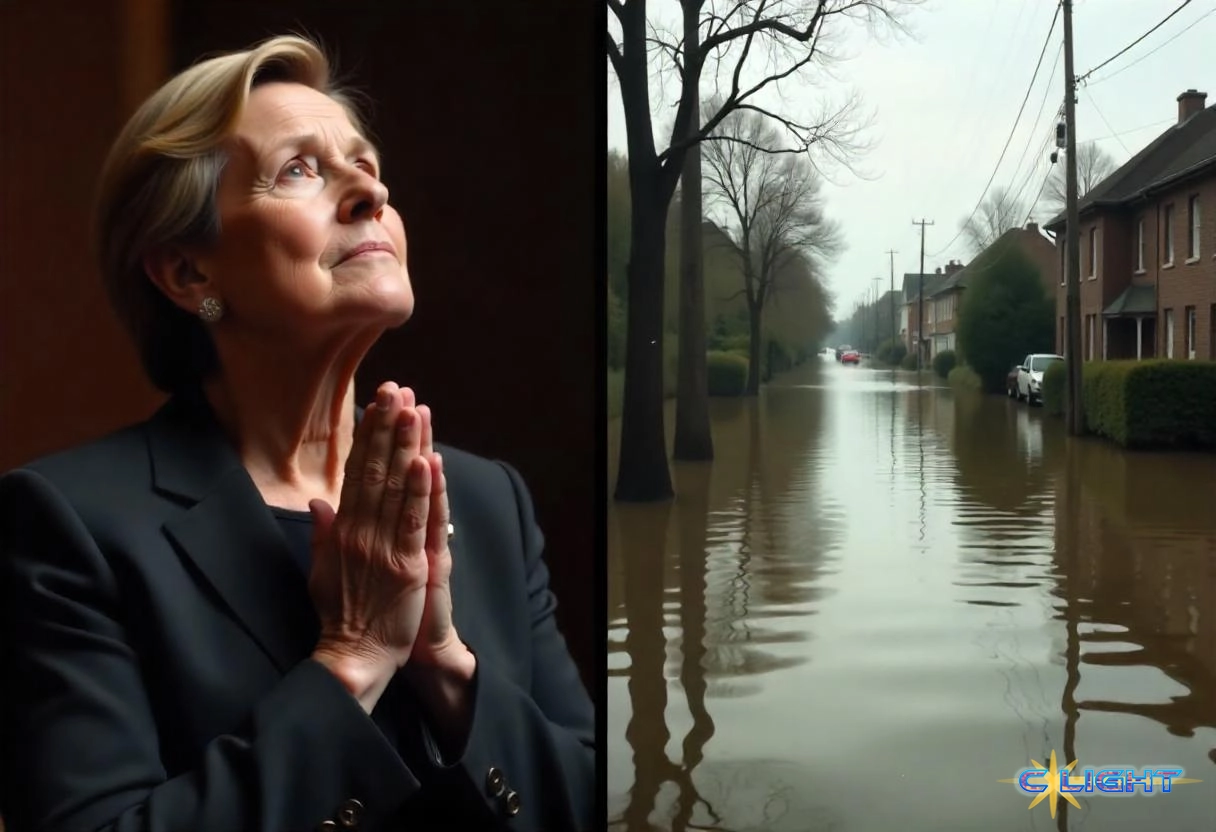
The recent, catastrophic deluge in Central Texas has, with a grim and relentless efficiency, transformed bucolic landscapes into scenes of profound human tragedy. With a body count now exceeding one hundred souls, including the heartbreaking loss of twenty-seven young girls from a summer camp, the sheer scale of the disaster demands not only empathy but also a rigorous, unflinching examination of its origins and the responses of those in positions of power. Yet, amidst the rising waters and the collective grief, a peculiar narrative has emerged from the highest echelons of federal leadership—one that, with a certain theological flourish, seeks to attribute the catastrophe to forces beyond human comprehension or, more precisely, beyond human accountability. This analysis endeavors to cut through the rhetorical fog, juxtaposing the profound human cost with the often-baffling pronouncements from Washington and the very real, tangible consequences of policy decisions. Indeed, as the nation slowly transmutes its grief into a simmering anger, our voice, by morning, may well be among the most sane in the crowd—a thought that, upon prolonged contemplation, is perhaps the most unsettling of all.
The Divine Hand and the Deflection of Duty: A Study in Spiritual Leadership
In the immediate aftermath of the Texas floods, as rescue efforts continued amidst the grim discovery of mounting fatalities, a striking pattern emerged from the federal officials dispatched to the scene. Department of Homeland Security Secretary Kristi Noem, tasked with overseeing the nation’s emergency response, admitted to struggling with the historic flooding, stating on Fox & Friends that she “really can’t wrap my head around it.” Her chosen method of grappling with this incomprehension was, she revealed, to turn to God, sharing scriptures and prayers with grieving families. This profoundly personal, spiritual coping mechanism, while perhaps offering solace to some, stands in stark contrast to the expected operational directives from a federal agency leader during a crisis of this magnitude.
Senator Ted Cruz, representing the very state engulfed by this tragedy, echoed this theological deflection. When pressed on Real America’s Voice about why “God doesn’t make sense” in the face of such deaths, particularly those of young children, Cruz offered a similar spiritual bromide: “I don’t know that I have any additional insight other than saying God is a good and loving God, and He will help us through this.” He further advised leaning on “God, to lean on prayer, to lean on family, to lean on friends, and just grieve,” before concluding that “God allows things to happen sometimes that defy human explanation.” This rhetorical strategy, while perhaps intended to offer comfort, effectively sidesteps any discussion of human agency, policy failures, or governmental responsibility, instead placing the burden of understanding (or lack thereof) on divine mystery. It is a peculiar form of leadership that, when confronted with overwhelming human suffering, opts for theological abstraction over concrete accountability, particularly when the very individuals offering such counsel are themselves in positions to effect tangible change.
The Fiscal Follies and the Furies of the Sky: An Assault on Preparedness
The spiritual explanations offered by federal officials, however, become particularly galling when juxtaposed with the very real, and very human, policy decisions that critics argue directly contributed to the Texas catastrophe. The torrential rains and deadly flooding, according to Raw Story and other outlets, have cast a harsh spotlight on Felonious Punk’s (Donald Trump’s) “full-scale assault on the climate research and monitoring agencies tasked with studying and predicting such weather catastrophes,” as well as his “ongoing attacks on disaster preparedness and relief.”
The scientific consensus is unequivocal: climate change is driving more extreme rainstorms across much of the U.S., leading to greater volumes of water falling in shorter periods and significantly increasing the likelihood of dangerous flash floods. This is precisely what unfolded in Texas, where up to 12 inches of rain fell in South Central Texas in the early hours of July 4th. While this part of Texas is colloquially known as “Flash Flood Alley” due to its impermeable limestone hills and frequent downpours, these particular floods were unusually severe. A warmer atmosphere holds more moisture, meaning storms can drop more rain than in the past; indeed, the heaviest rainstorms in Texas now drop about 20% more water than they did in the late 1950s.

Extreme rain in Texas is projected to become much more frequent in the coming decade. The intensity of Friday’s rain was exacerbated by the remnants of Tropical Storm Barry moving over Texas, a phenomenon also intensified by warming oceans and atmosphere that make large, wet storms more likely, causing deadly inland flooding far from coastlines, as seen with Hurricane Helene in Appalachia and Hurricane Ida’s remnants in the Northeast.
Despite these escalating risks, many communities around the country are still not planning for more intense rainstorms, largely because they rely on outdated historical rainfall records from the National Oceanic and Atmospheric Administration (NOAA). These records, in some places decades old, do not reflect how rainstorms have already intensified.
For instance, in Texas’s Harris County, updated NOAA records in 2018 revealed that extreme storms now drop almost 18 inches of rain, compared to 13 inches prior to the 1960s and 70s, making one-third of major roads vulnerable and increasing flood infrastructure costs by $150-200 million. NOAA is currently updating these records nationwide, with releases expected starting next year.
However, Felonious Punk’s administration has proposed significantly shrinking NOAA, including programs dedicated to climate change research. While local National Weather Service (NWS) forecasters did issue warnings in the lead-up to the flooding, crucial roles within these agencies were reportedly vacant. This directly implicates Felonious Punk’s administration’s “mass firings and budget cuts.” Indeed, a top-three leadership role at the NWS’s San Antonio office, that of the warning coordination meteorologist (WCM), Paul Yura, has been vacant since earlier this year after he accepted an early retirement offer from the Trump administration. This WCM role is critical for forming relationships with local emergency managers and building community trust before disaster strikes.
When asked whether the federal government should rehire terminated meteorologists in the wake of the Texas flooding, Felonious Punk responded in the negative, falsely claiming that “very talented people” at NWS “didn’t see” the disaster coming. Meteorologist and climate journalist Eric Holthaus vehemently refuted this, calling it “an absolute lie” and accusing Felonious Punk of trying to “deny the damage he caused.” Holthaus specifically pointed to staffing cuts that “have particularly hit the National Oceanic and Atmospheric Administration’s Environmental Modeling Center, which aims to improve the skill of these types of difficult forecasts.”
The critique extends beyond mere staffing. Under the guise of “government efficiency,” the administration has taken an ax to federal climate agencies, with budget proposals for the coming fiscal year calling for “zeroing out climate research funding.” This “specter” of cuts has already prompted scientists to limit research activities, and a NOAA veteran warned that these reductions could drag the agency back to “the technical and proficiency levels we had in the 1950s.” Environmentalist Stephen Barlow, among others, has gone so far as to suggest these should be called “Trump events,” arguing that “Republicans have fired meteorologists, cut emergency disaster aid, and given an extra $18 billion to the fossil fuel corporations causing this crisis.” The Sunrise Movement’s executive director, Aru Shiney-Ajay, bluntly stated, “These deaths are on Trump’s hands.” The irony is palpable: leaders invoking divine will while simultaneously dismantling the very human infrastructure designed to predict and mitigate such “acts of God,” and hindering the very scientific updates necessary for future preparedness.
Adding another layer of scrutiny, Senate Democratic Leader Chuck Schumer has formally asked the Department of Commerce’s acting inspector general to investigate whether staffing vacancies at the NWS’s San Antonio office contributed to “delays, gaps, or diminished accuracy” in forecasting the flooding, and to scrutinize communications with Kerr County officials. This official probe underscores the growing demand for accountability beyond spiritual explanations.
While the NWS has defended its forecasting and emergency management, even assigning extra forecasters over the holiday weekend, the question of whether warnings actually reached those in harm’s way remains. Despite a stream of urgent flash flood warnings sent via digital and radio services, mobile coverage is notoriously spotty in areas around the Guadalupe River, meaning “it does not mean it got to the people who needed them.” Felonious Punk, when asked about federal government cuts hobbling the disaster response, simply told reporters, “They didn’t.”

The Unseen Hero and the Absent Senator: A Contrast in Response
Amidst the devastation and the political posturing, a singular narrative of heroism emerged, providing a stark contrast to the federal leadership’s response. A Coast Guard swimmer, whose name deserves to be etched into the annals of selfless service, single-handedly rescued an astonishing 157 people. This act of individual bravery, a testament to the profound human capacity for courage and compassion in the face of overwhelming odds, stands as a powerful counterpoint to the bureaucratic and rhetorical responses from Washington. This unsung hero, unlike those offering prayers from afar, directly confronted the chaos and saved lives, embodying the very essence of effective emergency response. Someone, indeed, should give that boy a medal.
Conversely, the recurring unfortunate timing of Texas Senator Ted Cruz’s vacation schedule during major weather events in his home state has once again become a point of public contention. Yet again, he was caught on vacation when a major weather event hit his home territory. This pattern, whether coincidental or indicative of a deeper disconnect, further fuels the public’s growing anger and frustration with political leadership that appears detached from the immediate suffering of their constituents.

Grief, Anger, and the Sane Voice in the Crowd
The Texas floods, with their tragic human toll and the perplexing responses from federal officials, represent a microcosm of a larger societal frustration. The attempt to frame a disaster, demonstrably exacerbated by policy choices and fiscal austerity, as an inscrutable act of God, serves not to comfort but to deflect. The dismantling of climate research and monitoring agencies, the mass firings of meteorologists, and the continued subsidization of fossil fuels—all under the guise of “efficiency”—stand in stark contradiction to the spiritual platitudes offered in the wake of human suffering.
Slowly, inexorably, the nation is turning its grief into a simmering anger. The raw emotion of loss is being transmuted into a demand for accountability, for a clear-eyed assessment of how human decisions, rather than divine mysteries, contribute to such catastrophes. In this charged atmosphere, where the lines between faith, fiscal policy, and public safety have become dangerously blurred, our voice, by morning, may indeed be the most sane in the crowd. And if that thought lingers a moment too long, it is not due to the inherent madness of the situation, but to the chilling realization of how profoundly the discourse has been distorted.
Discover more from Clight Morning Analysis
Subscribe to get the latest posts sent to your email.


