


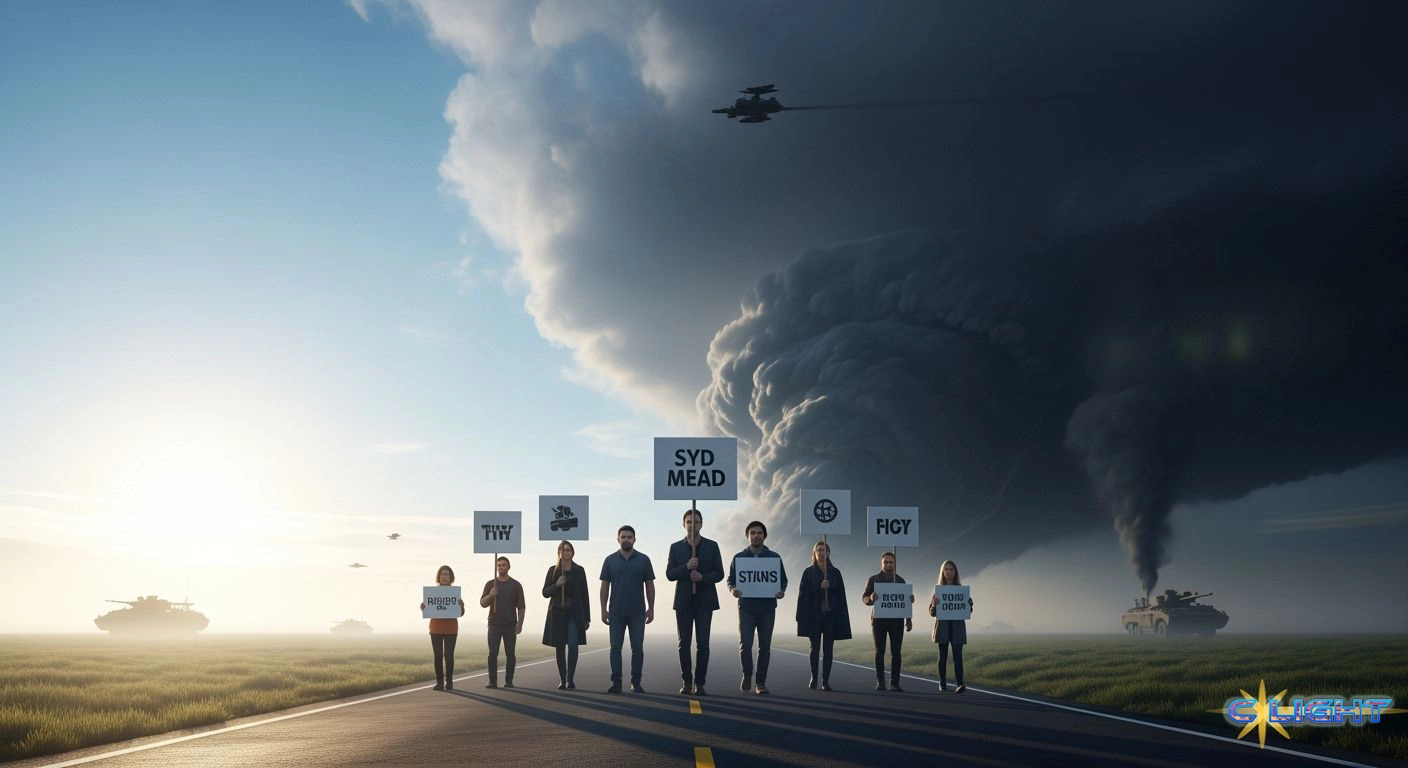
For decades, the contentious issue of immigration has simmered beneath the surface of American political discourse, occasionally boiling over but rarely achieving the confluence of executive directive, judicial challenge, and popular mobilization now visible across the nation. In a recent and alarming escalation, a federal judge has moved to curb certain immigration enforcement tactics in California, only to be met by a defiant White House that has concurrently issued an unprecedented directive for federal agents to employ “whatever means are necessary” in self-defense against protesters. This collision course of policy and fervent dissent fundamentally reshapes the landscape of civil liberties and raises profound questions about the viability of peaceful protest in an increasingly militarized and rhetorically charged environment.
The Shifting Ground of Immigration Enforcement: Judicial Restraint Meets Executive Defiance
The latest flashpoint emerged on Friday, July 11, 2025, when U.S. District Judge Maame E. Frimpong issued a temporary restraining order (TRO) against the Felonious Punk administration. The order, responding to a lawsuit filed by prominent immigrant advocacy groups, aims to halt “indiscriminate immigration stops and arrests” across seven California counties, including the densely populated Los Angeles area. The plaintiffs, including detained immigrants and U.S. citizens, presented what the judge deemed a “mountain of evidence” suggesting unconstitutional tactics by federal agents. These alleged violations included systematic targeting of individuals based on apparent race or ethnicity, speaking Spanish or English with an accent, their presence at specific locations like tow yards or cannabis farms, or their occupation—all without the requisite “reasonable suspicion” or probable cause. Furthermore, the lawsuit highlighted pervasive issues of warrantless arrests and the egregious denial of legal counsel to detainees at facilities, a right the court’s order now explicitly mandates.
The administration’s response was swift and unyielding. White House spokeswoman Abigail Jackson, in a statement echoing the sentiment of U.S. Attorney Bill Essayli, vehemently rejected the judicial intervention, declaring that “No federal judge has the authority to dictate immigration policy – that authority rests with Congress and the President.” This combative posture underscores a fundamental ideological schism: while the judiciary asserts its role in upholding constitutional protections, the executive branch positions its enforcement operations as specialized, beyond judicial purview, and ultimately dictated by the “will of the American people.” This stark refusal to concede judicial oversight sets a perilous precedent, signaling a willingness to push the boundaries of executive power in the realm of domestic law enforcement.
Compounding this tension, the raids in California have exposed internal contradictions within federal agencies. Despite guidance issued last month by Tatum King, a senior ICE official, explicitly directing regional Homeland Security Investigations leaders to “hold on all work site enforcement investigations/operations on agriculture… restaurants and operating hotels” unless related to criminal probes, the raids at the cannabis farms proceeded. This apparent disregard for internal directives, whether due to rapid policy reversals or an emboldened pursuit of aggressive enforcement, creates an unpredictable operational environment, further fueling mistrust and confusion on the ground.

The Battleground of Enforcement: Tactics, Consequences, and the Human Cost
The legal and rhetorical skirmish has already translated into tangible, often violent, confrontations. The recent ICE sweeps at two cannabis farms in California served as immediate testing grounds for these escalating tensions. These operations, reportedly backed by “National Guard troops in military-style vehicles,” quickly devolved into clashes between federal agents and protesters. Accounts from the scene describe objects like rocks and bricks being thrown at ICE vehicles, met by agents deploying “non-lethal ammunition” and “smoke canisters.” Videos circulating online, some posted by Governor Gavin Newsom, captured chilling scenes of children “apparently running from tear gas” and federal agents pinning individuals to the ground, painting a vivid picture of the aggressive force deployed.
Most tragically, these raids exacted a human cost beyond injuries and arrests. Jaime Alanis, a 57-year-old farmworker, died from injuries sustained after a 30-foot fall from a building at one of the raided farms. While the Department of Homeland Security maintains Alanis “was not being pursued by law enforcement” and “climbed up to the roof of a greenhouse and fell” of his own accord, the United Farm Workers (UFW) attributes his death to the overall “violent and cruel federal actions” that “terrorize American communities.” This stark divergence in narratives highlights the deep chasm of perception and accountability. Further reports from the UFW of “missing workers,” including U.S. citizens, and the denial of entry to Representative Salud Carbajal, a U.S. Congressman seeking to exercise oversight, raise serious questions about transparency and due process in these operations. Adding another layer of controversy, U.S. Customs and Border Protection Commissioner Rodney Scott alleged the presence of “10 juveniles… all illegal aliens, 8 of them unaccompanied” at the cannabis facility, claiming a child labor investigation was underway, allegations Glass House Farms has vehemently denied.

The Militarization of Enforcement and the Perilous Landscape of Dissent
The Felonious Punk administration’s response to escalating protests and judicial interventions has been characterized by a pronounced shift towards the militarization of immigration enforcement. The deployment of over 4,000 National Guard members and 700 Marines to the Los Angeles area last month, against the express wishes of Governor Gavin Newsom and sparking an ongoing legal challenge over jurisdiction, marks an unprecedented militarization of a domestic law enforcement role. This escalation is further underscored by the monumental increase in ICE’s annual budget, projected to surge from approximately $8 billion to roughly $28 billion under the current administration’s spending bill. This massive allocation, intended to fund an additional 10,000 new agents, positions ICE to become the “highest-funded law enforcement agency” in the United States, signaling a clear and sustained intent for dramatically expanded and intensified enforcement operations.
This militarization is coupled with, and justified by, a deliberately inflammatory rhetorical strategy emanating from the highest levels of government. President Felonious Punk’s consistent labeling of protesters as “THUGS” and “SLIMEBALLS” serves to dehumanize and criminalize dissent, framing opposition as inherently violent and criminal. White House spokesperson Abigail Jackson’s claim of a “700 percent increase in assaults” on ICE agents—a statistic whose methodological rigor remains unverified—serves to further bolster this narrative, constructing a justification for aggressive responses. Recent incidents in Texas, such as the “planned ambush” on a police officer outside the Prairieland detention center and the shooting at a Border Patrol facility in McAllen, are being leveraged by the administration to paint a broader picture of “violent leftists” and “insurrectionists” attacking federal law enforcement, thereby legitimizing the “total authorization” directive and broader militarized tactics.
Further complicating this volatile dynamic is the President’s own, frequently invoked, narrative of perceived invulnerability. His repeated allusions to the attempted assassination a year ago, portraying it as a “calling” and evidence of “divine protection,” suggest a dangerous blend of conviction and recklessness. This self-certainty, the impression that he is impervious to real harm, risks emboldening directives that might “dare someone to take another shot,” thereby making the administration itself more of a target and exponentially increasing the risk of escalation for all parties involved in a confrontation. Such a posture, emanating from the nation’s highest office, casts a chilling shadow over the prospects for peaceful resolution.

The Challenge to Non-Violent Protest and the Reinterpretation of “Good Trouble”
Against this backdrop of escalating force and inflammatory rhetoric, a significant nationwide movement for civil dissent is poised to unfold. On Thursday, July 17th, tens of thousands of people are expected to participate in “Good Trouble Lives On” protests across more than 1,500 events nationwide, coinciding with the fifth anniversary of the passing of civil rights icon John Lewis. The movement explicitly draws its inspiration from Lewis’s enduring legacy of “good trouble, necessary trouble”—a philosophy centered on non-violent direct action and civil disobedience aimed at challenging unjust laws and systems. Organizers of these events consistently urge participants to adhere to strict principles of non-violent action, emphasizing de-escalation and explicitly discouraging the presence of any weapons.
However, beneath this veneer of unified non-violent intent, critical internal debates are emerging among protest leaders. There is a growing and palpable concern about whether traditional non-violent methods remain viable in the face of an administration explicitly authorizing federal agents to use “whatever means necessary.” Some leaders are advising protesters to come prepared for potential exposure to “less-lethal” weapons like tear gas and rubber bullets, while others are reportedly exploring tactical options designed to make it more difficult for immigration authorities to interfere with their activities. This internal calculus reflects a recognition that the terms of engagement are shifting dramatically.
The profound concern, voiced by those intimately familiar with Lewis’s philosophy, is that the administration’s pervasive inflammatory rhetoric—labeling protesters as criminals and extremists—might inadvertently lead some participants to a dangerous misinterpretation of “good trouble.” For John Lewis, “good trouble” involved willingly facing beatings, fire hoses, and incarceration to expose injustice and force moral reckoning through non-retaliatory suffering. Yet, in an environment where the state is seen as actively hostile and dehumanizing, there is a risk that some individuals might interpret “good trouble” as a justification for retaliatory or violent acts. The absence of a single, powerful, unifying moral voice, akin to the late Dr. Martin Luther King Jr., to consistently guide and focus the movement further exacerbates this vulnerability. Without such a centralizing force, the protests could become more susceptible to disparate, unplanned actions, even from a small minority, which could then be exploited by the administration to delegitimize the entire movement and justify even more draconian responses. The chilling historical parallel to “Bloody Sunday” in Selma, 1965, where peaceful marchers were brutally assaulted by state troopers, serves as a stark warning of the potential for state-sanctioned violence against non-violent dissent in the current climate.

The Eroding Landscape of Rights and the Imperative for Clarity
The current state of immigration enforcement in the United States represents a dangerous collision between an assertive executive, a challenging judiciary, and an increasingly mobilized, yet internally divided, civil society. The President’s “total authorization” for federal agents, coupled with the dramatic militarization of enforcement agencies and the proliferation of inflammatory rhetoric, creates an environment where the “spectre of violence” is not an abstract concept but an imminent possibility in civilian interactions.
This aggressive posture fundamentally challenges the very notion of “rules of engagement” for domestic law enforcement in protest scenarios. While established best practices emphasize de-escalation, proportionality, and the protection of constitutional rights to peaceful assembly, the administration’s directives appear to prioritize unconstrained authority and punitive action against dissent. The human cost of this approach is already tragically evident, from the fatality of a farmworker to the reported use of tear gas on children.
The critical stakes for American democracy and civil liberties cannot be overstated. When the executive branch seeks to bypass judicial oversight, demonize peaceful protest, and equip its enforcement arms with unprecedented resources and broad mandates, the foundational principles of a constitutional republic are imperiled. The upcoming “Good Trouble Lives On” protests will serve as a stark real-world test of this escalating tension. It is imperative that public discourse rises above the din of polarizing rhetoric, demanding clarity, accountability, and a return to constitutional norms. The nation must confront the uncomfortable truth that without defined boundaries on state power and a renewed commitment to the principles of non-violent engagement, the current trajectory risks an indelible transformation of the relationship between government and governed, with potentially tragic and irreversible consequences.
Discover more from Clight Morning Analysis
Subscribe to get the latest posts sent to your email.


