


Buckle up.
The United States, a nation that champions itself as a beacon of liberty and justice, harbors a sprawling incarceration system whose practices and conditions are not merely inefficient or flawed, but, upon closer scrutiny, frequently descend into outright inhumanity. This is a system that not only deprives individuals of freedom but systematically exploits their vulnerability, generates revenue from their suffering, and perpetuates cycles of destitution that ripple far beyond prison walls. It is a reality that should prick at both the heart and the conscience of every reasonable person, for its sustained acceptance has brought us to a devastating point where the very fabric of our society is compromised. The notion that these conditions equate to being “tough on crime” is a cynical political fiction; they are, in stark reality, a profound violation of basic human dignity, a stain on the national conscience that, like other inhumane nations before us, America will eventually pay for.
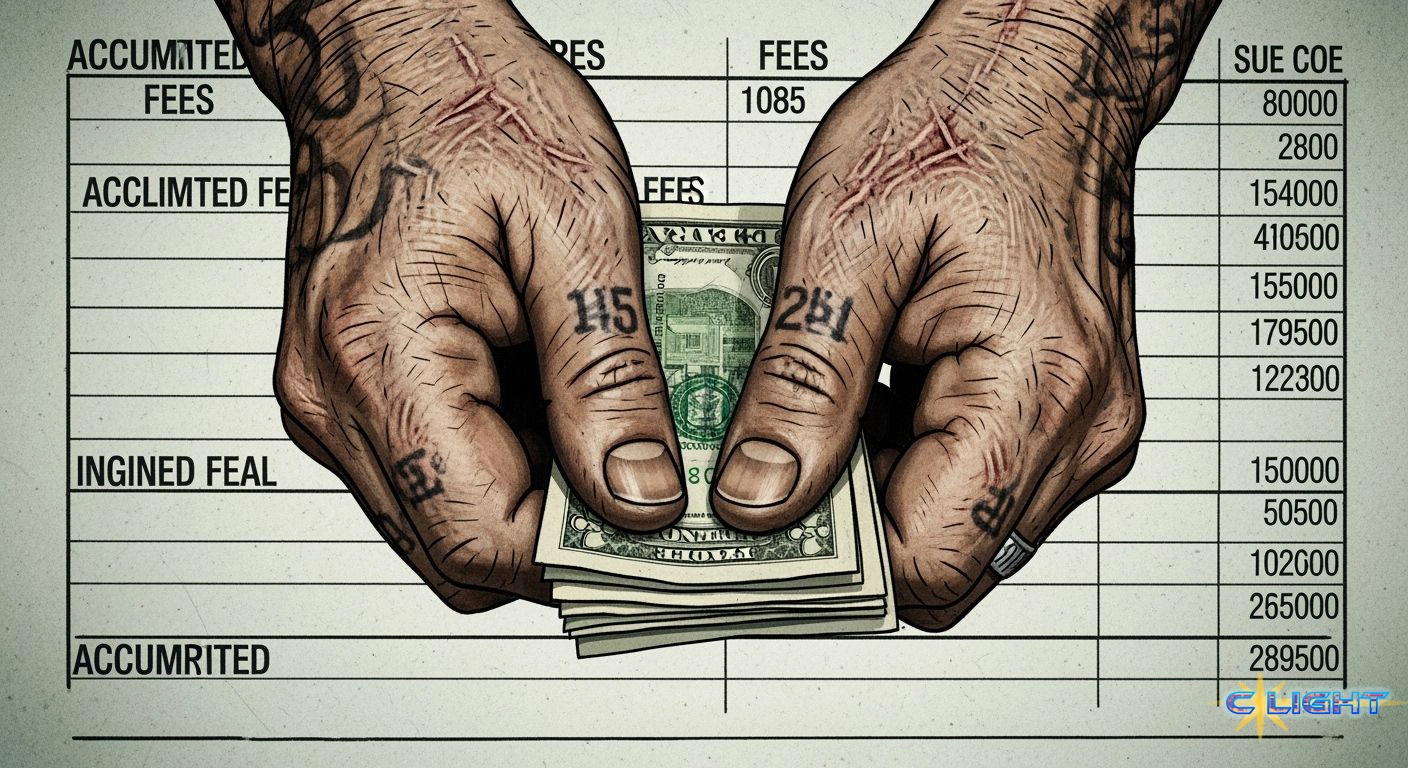
At the insidious core of this exploitation lies the widespread practice of “pay-to-stay” fees. An Axios review of exclusive data from Campaign Zero reveals that a staggering 48 states in the U.S. permit correctional facilities to levy a litany of charges on incarcerated individuals, including medical co-pays ($4 to $15 per visit for those earning as little as $0.50 an hour) and daily “room and board” fees. Forty-two states and Washington, D.C., explicitly allow for adult room and board fees, while 43 permit adult medical fees. This predatory mechanism, which ensnares a majority of the nation’s 1.8 million incarcerated individuals, functions as a “debt wheel,” automatically deducting from meager prison wages or accounts, often accumulating into insurmountable debts that follow individuals long after their release. As DeRay Mckesson, executive director of Campaign Zero, explains, this practice creates “financial exploitation disguised as justice,” stabilizing lives and entire communities by burdening the most vulnerable with bills they cannot pay. The irony is bitter: while these fees raise “hundreds of millions of dollars” for state coffers—ostensibly funding victims’ programs or DNA databases—they are rarely met with public resistance, and disturbingly, some state lawmakers remain entirely unaware of their existence. This revenue, decoupled from any genuine public safety benefit, instead perpetuates the cycle of incarceration, disproportionately harming people of color already overrepresented in the system, even charging those who committed “victimless” crimes with “restitution for victims.”

Beyond financial exploitation, the physical and psychological torment inflicted by solitary confinement stands as a stark testament to the system’s cruelty. Experts estimate that between 75,000 and 80,000 people are subjected to this “restrictive housing” on any given day in the U.S.—a number that, alarmingly, has increased between 2019 and 2024, despite widespread calls for reform. The tragic death of Adam Bryant, a 29-year-old incarcerated at Vigo County Jail in Indiana, vividly illustrates the barbarity. Arrested for domestic battery, Bryant, already struggling with mental health and addiction, suffered severe stomach pains and vomiting, was attacked by other inmates, and was then placed in solitary confinement. In the agonizing five days leading to his Christmas Eve death from hyponatremia, he hallucinated, grew too weak to press an intercom button for help, and was largely neglected by staff, whose claims of providing medication were contradicted by video evidence.
Solitary confinement, a practice that became popular in the U.S. in the 1980s and 90s amidst soaring prison populations, has been unequivocally “decried by advocates, attorneys, and mental health professionals.” Research confirms its profoundly traumatic effects, particularly for those with pre-existing mental health challenges, often proving fatal. A study by the Jama Network found that formerly incarcerated individuals are 24% more likely to die within their first year of release, and a staggering 127% more likely to die from opioid overdose in the first two weeks post-release, directly linking the practice to a national public health crisis. Jean Casella, director of Solitary Watch, lambasts the “real abandonment of people with mental health challenges in this country” within a system that fails to acknowledge that isolating individuals, particularly those struggling, does not enhance safety for anyone, including correctional officers. Indeed, evidence from facilities that have reduced or eliminated solitary confinement demonstrates a decrease in violent incidents. Yet, political roadblocks, exemplified by New York prison guards striking to roll back limitations on isolation and Governor Kathy Hochul’s temporary suspension of the HALT Act (later reversed by a judge), demonstrate the powerful inertia against humane reform.
Nowhere is this systematic inhumanity more starkly on display than in the burgeoning network of immigrant detention centers, particularly Florida’s state-run facility in the Everglades, grimly dubbed “Alligator Alcatraz” by its Republican architects. Recently toured by Democratic lawmakers, this compound, erected in a matter of weeks to hold up to 5,000 people as part of Felonious Punk’s “mass deportation” crusade, was described as “disturbing,” “disgusting,” and an “internment camp.” The term “internment camp” is used advisedly, referring to the mass detention of a specific population without full due process or trial, a practice with a troubling history in the U.S.

The descriptions from touring representatives paint an appalling picture of conditions starkly less than what any human being should be subjected to under any circumstances:
- Dehumanizing Confinement: “Wall-to-wall humans. 32 detainees per cage,” a layout atypical of other immigration facilities, with “only their bunk beds” inside.
- Grossly Inadequate Sanitation: “Bugs all over the mattresses that had not yet been used,” and “three tiny toilet units that have a sink attached to them” where detainees “get their drinking water, and they brush their teeth where they poop, in the same unit.” Prior complaints of overflowing toilets and “feces being spread everywhere” further confirm this degradation.
- Insufficient Food and Water: Lawmakers observed “small… gray turkey and cheese sandwich, an apple, and chips” deemed “far too small to sustain a fully-grown man,” contrasting with hearty portions given to staff. Prior reports from detainees cited “worm and maggot-infested food.”
- Harsh Environment: Temperatures in “air-conditioned” areas ranged from 83°F to 85°F, with the likelihood of much hotter conditions inside due to body heat and poor ventilation.
- Extreme Vulnerability: “Evidence of flooding” and floors only “eight inches above the ground” raised grave concerns about the catastrophic impact of even a minor tropical storm in hurricane-prone Florida.
This facility, estimated to cost an extraordinary $450 million per year, is lambasted by critics as a “total cruel political stunt” that directly contradicts the administration’s claims of housing “the worst of the worst criminals.” In stark reality, reporting indicates only a third of its detainees have criminal convictions, with over 250 individuals held without having been convicted or even charged with a crime. The refusal to allow outside journalists, direct detainee access, or full congressional oversight further signals a system operating under a veil of secrecy, despite confirmation that federal agencies exert complete control over its operations. The desperate cries of “Help me, help me!” and “Libertad! Libertad! Libertad!” heard from within, some from self-professed U.S. citizens, offer a chilling counter-narrative to the official pronouncements.

When measured against international human rights and humanitarian standards—such as the UN Standard Minimum Rules for the Treatment of Prisoners (Nelson Mandela Rules) which prohibit cruel, inhuman, or degrading treatment, prolonged solitary confinement, and mandate humane conditions, dignity, and access to medical care—a great deal of the American incarceration system operates in clear violation. The systematic imposition of punitive debt, the widespread use of debilitating solitary confinement, and the deplorable conditions in facilities like “Alligator Alcatraz” are not merely policy failures; they represent a fundamental rejection of the inherent dignity of the human person.
This is not “tough on crime”; it is fundamentally inhumane, starkly less than what any human being should be subjected to under any circumstances. The long-term acceptance of such increasingly dehumanizing conditions, often masked by political rhetoric and public indifference, brings profound and devastating consequences for the nation. History teaches that societies that systematically accept such cruelty eventually pay a heavy price. This “payment” can manifest as international condemnation and isolation, internal social unrest, a profound erosion of public trust, economic drains, and a deep moral decay that poisons the very soul of the nation. It is a reckoning that, one way or another, America will eventually face for its sustained inhumanity.

Discover more from Clight Morning Analysis
Subscribe to get the latest posts sent to your email.


