


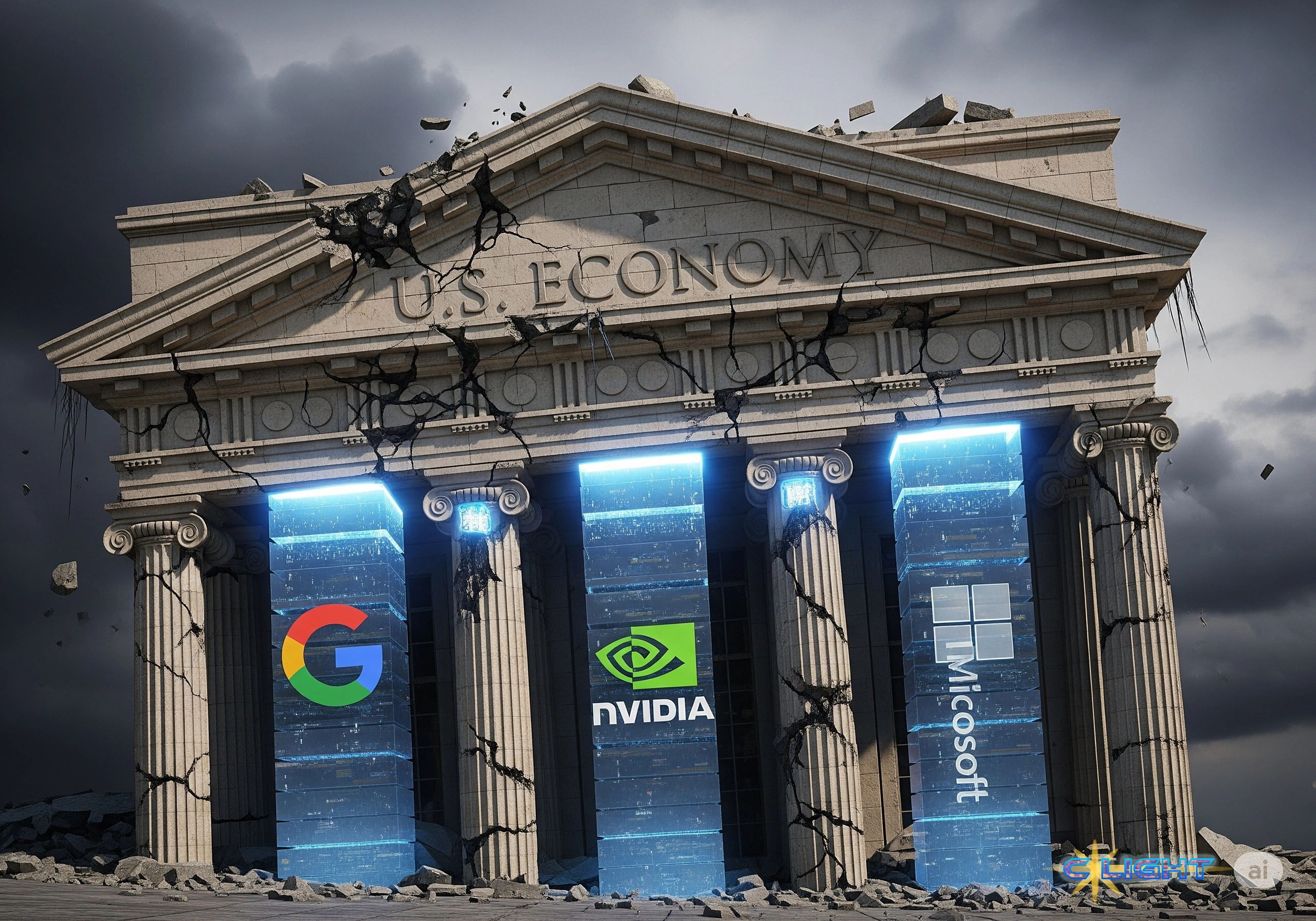
The artificial intelligence that helps me synthesize and outline these words, is part of an economic boom. So are the four that help with imaging and the unnumbered ones embedded in WordPress that do layout and publishing work. The data centers they live in, the silicon chips that form their brain, and the immense energy required to power their thoughts are the component parts of a private-sector spending spree so vast that it is single-handedly propping up an otherwise weakening U.S. economy. This is a strange and abstract reality. But for millions of Americans, the effects of this new AI-driven economy are becoming deeply personal, arriving right at their front door in a simple cardboard box.
Full disclosure: I was once a subscriber to HelloFresh, one of the nation’s largest meal-kit delivery services. For a time, it was a wonderful convenience. But for a family of four, it quickly became an unaffordable luxury. Yet, the business model thrives, and it does so by catering to a powerful social trend: the reality of a country where people are choosing to be, or are forced into being, increasingly isolated. This is a model that makes it so one never has to leave the house, even for quality food. And as the demand for such services increases, so does their reliance on the very AI boom my desktop assistants represent. The story of HelloFresh is a perfect microcosm of our new economy: a blend of convenience and cost, driven by technology, and with profound, often hidden, consequences for us all.
Part I: An Economy on Steroids
The current U.S. economy is a paradox. While traditional indicators like consumer spending and the job market show signs of weakening, the overall GDP continues to grow. The reason, as a flood of recent analysis has shown, is almost entirely due to a massive, unprecedented “capex war” in artificial intelligence. A handful of tech giants—Google, Meta, Amazon, Microsoft, Apple, and Nvidia—are on track to spend nearly $400 billion this year alone on building and equipping AI data centers. To put that number in perspective, it is more than the entire European Union spent on defense last year. It is a spending spree that dwarfs the inflation-adjusted cost of the entire Apollo moon landing program.
This is not just an investment; it is, as economists have noted, a “massive private sector stimulus program.” The scale of this infrastructure build-out is second only to the railroad boom of the 1880s, an era of “robber barons” who reshaped the nation. This “AI complex,” as one market strategist put it, “seems to be carrying the economy on its back now.” But an economy dependent on the spending of just six companies is not a healthy one. It is an economy on steroids, enjoying a powerful but artificial and dangerously unstable surge.

Part II: A Case Study in Adaptation
To see how this massive, abstract economic force translates to the real world, one need only look at a company like HelloFresh. Facing a cratering post-pandemic valuation, the company recently announced a $70 million investment to refresh its menu and, crucially, to deepen its integration with AI. This is a case study in how modern companies are being forced to adapt to this new, AI-driven landscape.
The strategy is twofold. First, they are using AI software to solve a problem of their own creation: a vastly expanded menu. To combat customer boredom, they are more than doubling their meal offerings. To prevent this new level of choice from overwhelming the user, they are implementing a Netflix-style AI to streamline decisions and personalize recommendations. Second, they are investing in AI hardware. The company plans to install “humanoid-style robots” in its warehouses to speed up the tedious process of packing the meal kits. It is a perfect fusion of the digital and physical arms of the AI revolution.
Part III: The Hidden Risks and Unanswered Questions
This AI-driven adaptation comes with immense risks. The first is the risk of a catastrophic bust. As Axios notes, the tech industry is notoriously cyclical: a period of overbuilding is followed by a glut, then a shortage, then another round of overbuilding. The dot-com bust of the early 2000s was fueled by a nearly identical, unsustainable boom in telecom infrastructure spending. The cautionary tale of the failed Foxconn factory in Wisconsin, a grand, Trump-era promise that never materialized, is a more recent reminder that these massive tech projects can and do fail. As economist Noah Smith has warned, with a “large and increasing amount of debt being used to fund one single sector,” a data-center bust could trigger a full-blown financial crisis.
The second, more immediate risk is to the American workforce. When asked about the new humanoid robots, a HelloFresh executive offered the classic corporate doublespeak. “There’s no plan to cut the company’s workforce,” he claimed, before immediately revealing the real goal: “It’s about not needing to grow employees three times in the future.” This is a clear and chilling admission that the purpose of this automation is to suppress future hiring. The jobs that might have been created by the company’s expansion will now be done by robots. This is the tangible, human cost of the AI boom, a story of long-term job displacement hiding behind short-term promises.

An Unstable Future
The AI boom is real, and it is reshaping our world in ways both large and small. It is providing a powerful, short-term stimulus to the U.S. economy. It is enabling companies like HelloFresh to offer unprecedented levels of choice and convenience, delivered right to the doors of an increasingly atomized society. But it is an unstable, unequal, and dangerously top-heavy boom. It is built on a speculative foundation reminiscent of the Gilded Age and the dot-com bubble, creating a systemic risk for the entire financial system. And it is driven by a logic that explicitly prioritizes automation over the creation of new human jobs. The story of a meal-kit company is not just about getting dinner on the table; it’s a preview of the precarious and uncertain economic future we are all building, one AI-powered decision at a time.
Discover more from Clight Morning Analysis
Subscribe to get the latest posts sent to your email.


