


6 minutes read time.
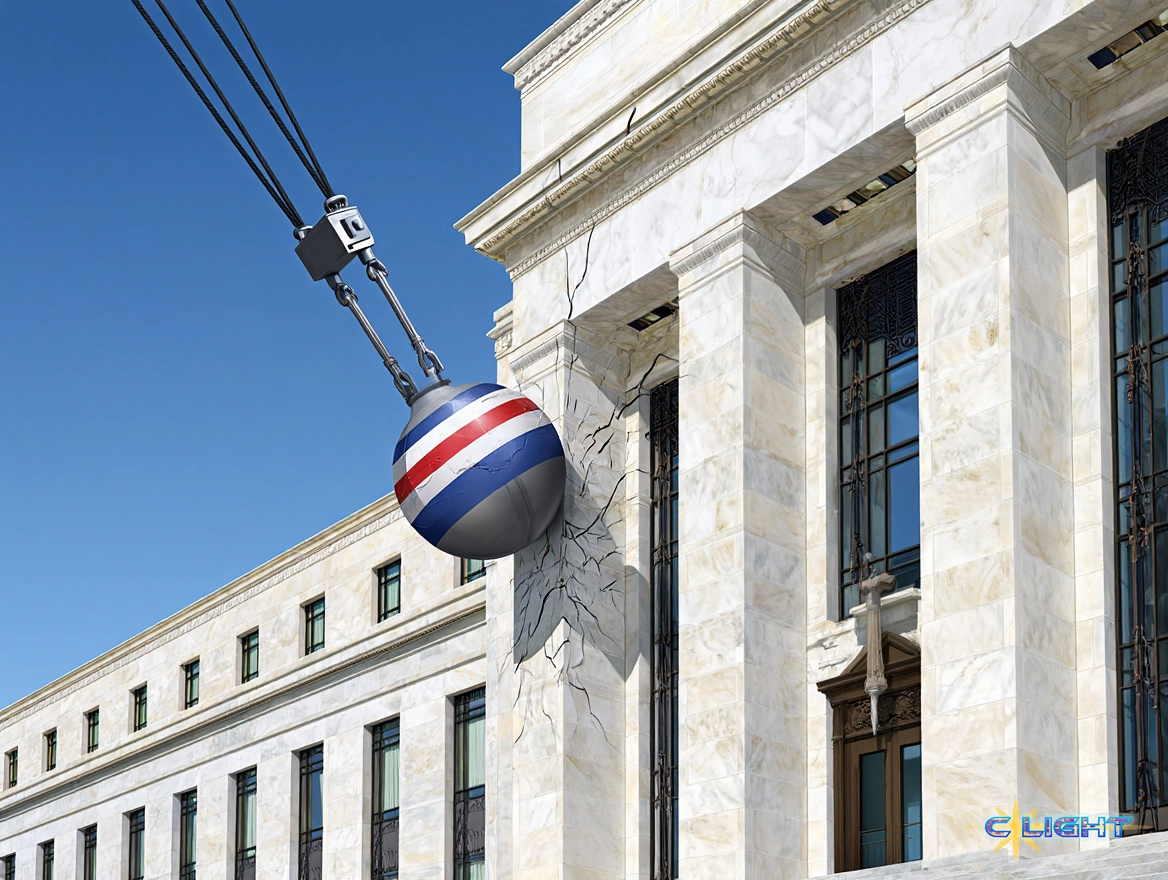
In a move of stunning and unprecedented audacity, the Felonious Punk administration has declared open war on the independence of the U.S. Federal Reserve, the nation’s central bank and a cornerstone of the global financial system. On Monday, the President announced via social media that he had fired Federal Reserve Governor Lisa Cook, effective immediately. The action, which Governor Cook has declared illegal and has vowed to fight, is a radical escalation in the administration’s long-running campaign to bend the historically independent institution to its political will. The official justification for this extraordinary move is a set of flimsy, unproven allegations of mortgage fraud from years before Cook’s appointment. But this is, as one analyst aptly put it, a mere “fig leaf.” The reality is that this is a legally dubious, politically motivated, and profoundly dangerous power grab, a direct assault on the institutional norms that have safeguarded the American economy from partisan whims for over 70 years.
The Anatomy of a Flimsy Pretext
The administration’s case against Governor Cook is a masterclass in political retribution masquerading as legal due process. The allegations were first laundered into the public sphere by Bill Pulte, a Felonious Punk appointee and the head of the Federal Housing Finance Agency. Pulte, who has been a key figure in the administration’s broader campaign against the Fed, alleged that Cook had committed mortgage fraud in 2021 by improperly designating two different properties as her primary residence to obtain more favorable loan terms. He then referred the matter to the Justice Department for criminal prosecution.
This provided the pretext the White House needed. In a letter posted to social media, the Felonious Punk cited these unproven allegations as the “cause” for her immediate removal, claiming he no longer had “confidence in your integrity.” However, as legal experts have been quick to point out, this justification is built on a foundation of legal quicksand. The Federal Reserve Act does allow a president to fire a governor “for cause,” but that is typically understood to mean serious misconduct or dereliction of duty while in office. As Lev Menand, a law professor at Columbia, noted, “This is not someone convicted of a crime. This is not someone who is not carrying out their duties.” Furthermore, a “for cause” removal typically requires a formal proceeding that would allow the accused to answer the charges and present evidence—a basic tenet of due process that has been completely ignored in this case. Cook’s lawyer, the high-profile attorney Abbe Lowell, was blunt in his assessment, stating that the president’s “reflex to bully is flawed and his demands lack any proper process, basis or legal authority.”
The tactics themselves fit a disturbing and familiar pattern. The administration has trotted out similar, unsubstantiated allegations of financial impropriety against other perceived political enemies, including New York Attorney General Letitia James. The attack on Cook is not an isolated incident; it is the deployment of a well-worn political playbook against a new and critically important target.

The Real Motive: A War on Independence
The true motive behind this unprecedented assault has nothing to do with four-year-old mortgage applications. It is about raw political power and the administration’s relentless desire to control interest rate policy. The Felonious Punk has been engaged in a years-long, often vitriolic public feud with Fed Chair Jerome Powell, whom he has derided as a “numbskull” and a “stubborn moron” for not slashing interest rates as aggressively as the White House has demanded. Having failed to intimidate Powell, the administration is now attempting to remake the Fed’s Board of Governors from within.
This is a direct and dangerous reversal of a 70-year-old norm in American politics. Since the Fed gained its independence from the Treasury Department in 1951, presidents of both parties have, for the most part, respected the “wall of separation” that allows the central bank to make difficult, and often politically unpopular, decisions to control inflation without fear of reprisal. The pressure applied by presidents like Nixon and Johnson, which was largely behind closed doors, is widely blamed for the rampant inflation of the 1970s, a historical lesson this administration seems determined to ignore.
The stakes are immense. If the Felonious Punk succeeds in ousting Cook, he will have a second vacancy to fill on the seven-member board, potentially giving his own appointees a 4-3 majority. This would fundamentally alter the balance of power within the institution, a fact not lost on critics. “It’s an authoritarian power grab that blatantly violates the Federal Reserve Act,” declared Senator Elizabeth Warren. Peter Conti-Brown, a professor at the Wharton School, was even more dire in his assessment, warning that a successful firing would spell “the end of central bank independence as we know it,” allowing the president to “run riot over the Federal Reserve.”
The Global Fallout: A Crisis of Confidence
This domestic power play is already having serious and predictable consequences on the world stage. The news of the attempted firing immediately sent jitters through global financial markets. U.S. Treasury yields rose, the dollar dipped, and stock futures fell. This is not just a temporary reaction; it is a signal of a dawning crisis of confidence in the stability and predictability of the U.S. financial system.
International investors and allied central banks rely on the Federal Reserve’s political independence as a guarantee that the U.S. will manage its economy responsibly and keep inflation in check. The administration’s actions directly threaten that guarantee. As Julia Lee, an analyst at FTSE Russell, told the BBC, the “key question for markets is if Trump succeeds in replacing Cook, could he reshape the Fed’s composition and how would that impact the market’s perception on US investibility?” The fear, as one Japanese strategist noted, is that whoever comes next “may just listen to whatever the White House wants.” This is not just a legal battle; it is an act of economic self-sabotage that undermines international faith in the U.S. dollar and the American economy as a whole.

A Constitutional Crisis in the Making
The attempted firing of Governor Lisa Cook—the first Black woman to ever serve on the Federal Reserve’s board—is more than just a political scandal. It is a constitutional crisis in the making, a dangerous test of the limits of presidential power over one of the nation’s most critical and historically independent institutions. It is a battle that will now almost certainly be fought in the courts, potentially reaching a Supreme Court whose conservative majority has already shown a willingness to take an expansive view of presidential authority.
The flimsy pretext of mortgage fraud has been exposed for what it is: a fig leaf for a raw, partisan power grab. The true goal is to dismantle the independence of the Federal Reserve and turn it into a political tool of the White House. The consequences of this action, if it is allowed to stand, will be severe and long-lasting, not just for the American economy, but for the very idea of a government of laws, not of men.
Discover more from Clight Morning Analysis
Subscribe to get the latest posts sent to your email.


