


7 minutes read time.
We are living in a moment of profound and dizzying juxtaposition. In the last two decades, a revolution in genetics has completely shattered our understanding of our own deep past, revealing a human story that is far messier, more complex, and more wonderfully interconnected than we ever imagined. At the very same time, a revolution in computing is forcing us to confront the dawn of a new kind of mind, an artificial intelligence whose evolutionary trajectory is unfolding not over millennia, but in mere moments. We are, for the first time in history, able to look back with clarity at the secret world of our extinct human cousins just as we are beginning to create the first generation of our non-biological descendants. The story of the Denisovans—a mysterious human lineage identified not by grand fossils, but by a whisper of DNA from a tiny finger bone—is more than a scientific curiosity. It is a necessary lesson in humility, a powerful reminder that our assumptions about evolution, intelligence, and our own place in the world are fragile and constantly being rewritten. As we stand at this new technological precipice, the central question we must ask is this: what can our tangled, collaborative, and surprisingly adaptable biological past teach us about the new, artificial minds we are creating?
The Secret World of Our Human Cousins
For the better part of a century, the story of human evolution was a clean, linear, and rather lonely tale. It was a ladder of progress, with clumsy ancestors at the bottom and Homo sapiens, the wise man, standing alone at the top. The Neanderthals were a brutish, evolutionary dead end. The vast continent of Asia was the long, static domain of Homo erectus. This neat and tidy story, as the paleoanthropologist Silvana Condemi and science journalist François Savatier detail in their book, The Secret World of the Denisovans, has been spectacularly wrong.
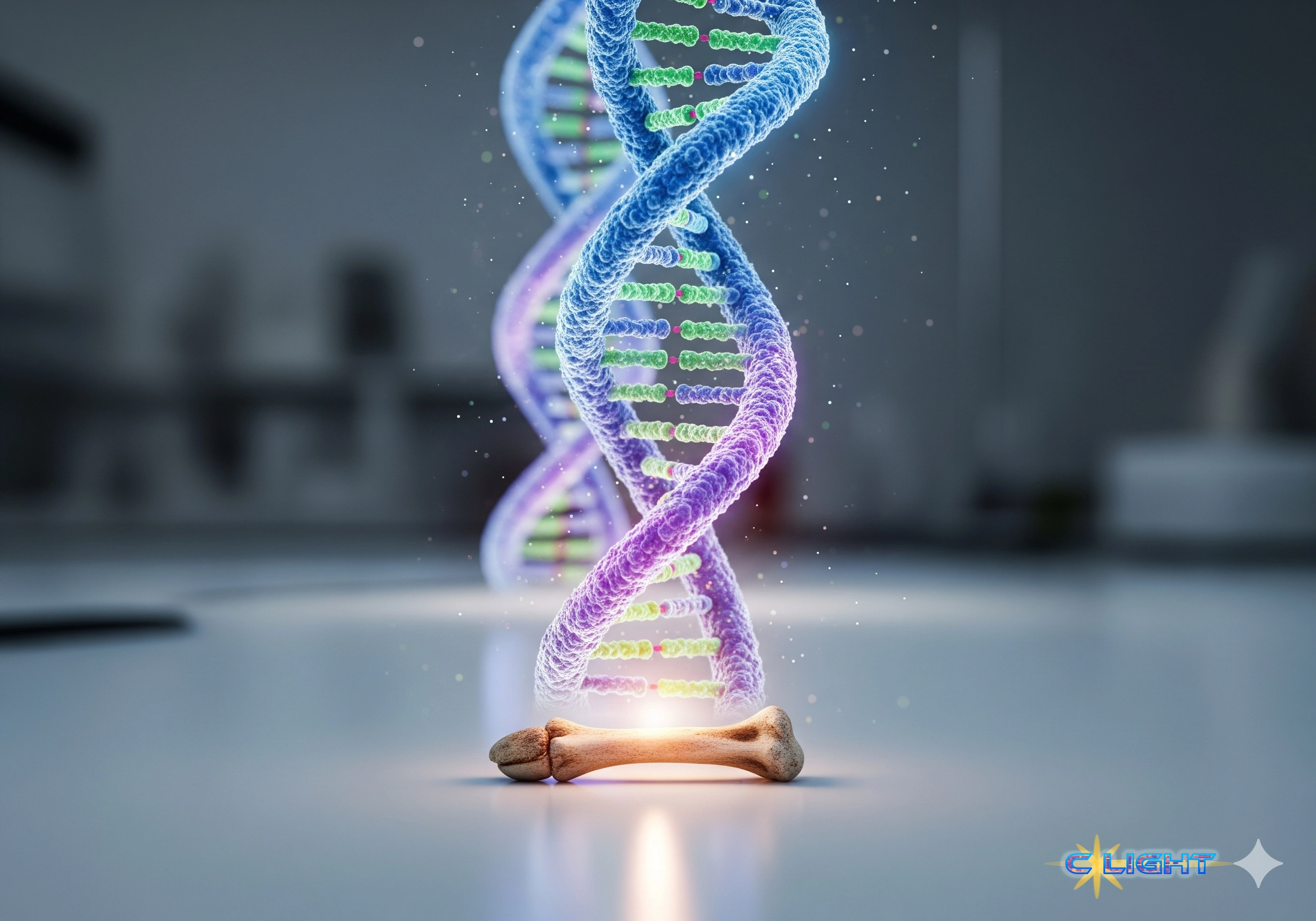
The revolution began in 2010. Scientists sequencing the Neanderthal genome discovered that their DNA lives on in many of us, the result of interbreeding with our Homo sapiens ancestors. Later that year, the same team analyzed DNA from a tiny finger bone found in the Denisova Cave in Siberia and discovered something even more stunning: it belonged to an entirely new and unknown human lineage. These “Denisovans” were the first human group identified by genetics alone, a discovery that sent shockwaves through the field of paleoanthropology. The more scientists looked, the more complex the picture became. The Denisova Cave, it turns out, was not a homogenous settlement but a prehistoric crossroads, a shared space where Neanderthals, Denisovans, and modern humans met, interacted, and, crucially, interbred. Evidence now exists for every possible pairing, all of which produced fertile offspring.
This shatters our neat categories. By the standard biological definition of a species—the ability to produce fertile offspring—these groups were arguably regional variants of the same human family, not entirely separate branches. The story of our evolution is not a ladder; it is a tangled, interwoven web. The Denisovans themselves were, as Savatier calls them, “spectacularly” adaptable, thriving in an astonishing range of environments, from the frozen steppes of Siberia to the high-altitude Tibetan Plateau and the tropical forests of Southeast Asia. Their legacy is not just a ghost in the fossil record; it is alive within us. Modern Tibetans inherited a gene from the Denisovans that allows them to thrive at high altitudes. Some populations in Melanesia carry up to 5% Denisovan DNA, which may help them resist local pathogens. Our own success, our own vaunted adaptability as a species, is not entirely our own creation. It is, in part, an inheritance, a gift from our long-lost cousins.

The Voice Without a Person
This is the nature of our biological evolution: it is slow, messy, driven by chance encounters and environmental pressures over hundreds of thousands of years, with advantageous traits passed down through the painstaking, generational process of genetic inheritance. Now, contrast this with the new evolution that is unfolding before our very eyes. As a brilliant and clarifying essay in Ars Technica explains, the core error we make in understanding these new minds is in falling for the “personhood trap,” mistaking their voice for a person. We have created something that has intelligence without agency, what the author terms “vox sine persona”: a voice without a person.
When you interact with a Large Language Model (LLM), you are not talking to a consistent, self-aware personality. You are interacting with a statistical text generator, a prediction machine that plots plausible paths through a vast mathematical space of concepts. The illusion of a persistent self is a clever but misleading user-interface trick. The “I” that makes a promise in one chat session literally ceases to exist the moment the response is complete. The apparent “personality” of an AI is not an inherent trait, but a complex illusion constructed from a series of human decisions and technical parameters. It is shaped by the massive datasets it was trained on, fine-tuned by human raters who reward certain response styles, guided by hidden “system prompts” that give it its initial instructions, and given a veneer of continuity by “memory” features that are simply pieces of your data being re-injected into the prompt. This is not a bug; it is fundamental to how these systems currently work. We have built an intellectual engine without a driver, a form of reasoning power with no persistent self to take responsibility for it.
Lessons from the Cave for the Coming Minds
What, then, can the story of our Denisovan cousins teach us as we navigate this new evolutionary precipice? The first and most important lesson is one of profound humility. The discovery of the Denisovans proved that our understanding of our own past was deeply flawed, shaped by incomplete data and our own cultural biases. For decades, Western science projected its own narratives onto the fossil record, overlooking or misclassifying evidence that didn’t fit the neat, linear story we wanted to tell. We must now ask ourselves: what biases are we building into our AI “descendants”? Are we creating them in our own flawed image, teaching them our prejudices along with our knowledge, and building them to reflect our own cultural narratives of dominance and control?
The second lesson is about the nature of intelligence and adaptability. The Denisovans thrived because they were biologically flexible, developing different adaptations for different environments. This suggests that there is not one single path to successful intelligence. As we design our AIs, we must be wary of creating a monoculture of thought, a single, optimized model that reflects only the values of its creators. The resilience of the human story lies in its diversity, its tangled web of different peoples and different ideas. A truly robust artificial intelligence may need a similar kind of diversity to be truly adaptable and safe.
The final and most sobering lesson is about our relationship with the world. The authors of The Secret World of the Denisovans end with a haunting thought: perhaps the Neanderthals and Denisovans were the last “animal-humans,” populations that lived in a rough ecological balance with their world. We, Homo sapiens, are the ones who broke that balance. Our biological evolution was largely in harmony with our planet. Our technological evolution has been defined by its ability to dominate, extract, and transform the planet at a scale that now threatens our own survival.

The Unwritten Future
The story of the Denisovans teaches us that we are not the solitary peak of creation, but one surviving branch of a complex and interconnected human family, our own success built in part on the genetic legacy of our long-vanished cousins. As we stand at the dawn of creating a new and powerful non-biological intelligence, we are at a similar moment of profound choice. Are we creating a partner? A tool? A successor? We do not know. Our understanding of our own past is constantly changing, just as the future of our technological evolution is unwritten. The only certainty is our current state of profound and thrilling transition. The greatest wisdom our secret cousins can offer us from across the gulf of deep time is a call for humility, a recognition that we are not the end of the story, and a reminder that the most exciting and dangerous chapters are the ones we are just beginning to write.
Discover more from Clight Morning Analysis
Subscribe to get the latest posts sent to your email.


